Back
Back
When the No Surprises Act was first enacted in 2020, it was hailed as a win for protecting patients from unexpected, out-of-network charges. By establishing clear resolution processes for emergency services and services by out-of-network providers at in-network facilities, the NSA aimed to eliminate the financial and administrative burden of balance billing from consumers’ shoulders.
Unfortunately, in most cases, that burden simply got shifted to others: the third-party administrators (TPAs) and health plan sponsors now responsible for the negotiation and arbitration process.
Today, maintaining compliance with NSA regulations — including independent dispute resolution (IDR) — demands extensive time and energy from TPAs and health plans. The strict timelines and burdensome workflows of this process are a full-time job for many administrators, who deserve a better solution to meet their clients’ needs.
Vālenz Health® is here to deliver it.
Below, learn how our compliance and cost-containment tools remove that burden from your shoulders with comprehensive support through every step of the No Surprises Act IDR process.
Table of Contents
- The NSA IDR Process: An Unanticipated Load on Today’s TPAs
- The Case for Third-Party NSA and IDR Support
- NSA Claim Repricing from Vālenz Health®: An All-in-One NSA and IDR Compliance Solution
- Ensure NSA Compliance and Minimize IDR Burden With Vālenz Health® Today
The NSA IDR Process: An Unanticipated Load on Today’s TPAs
Early versions of NSA regulations stipulated a payment formula for determining qualified payment amounts (QPAs), or the median of contracted rates for a specific service in the same geographic region within the same insurance market.
In response to provider opposition to this approach, the federal NSA regulations eventually adopted the independent dispute resolution system — a negotiation process that occurs when providers and insurers cannot agree on payment amounts for a given out-of-network claim.
Unfortunately, federal agencies vastly overestimated the ability of providers and insurers to amicably resolve these payment disputes within the pre-IDR window. In the nine months after the IDR system was first launched in 2022, more than 10 times the expected number of disputes were filed. Over the last few years, the number of disputes filed has exceeded 4 million.
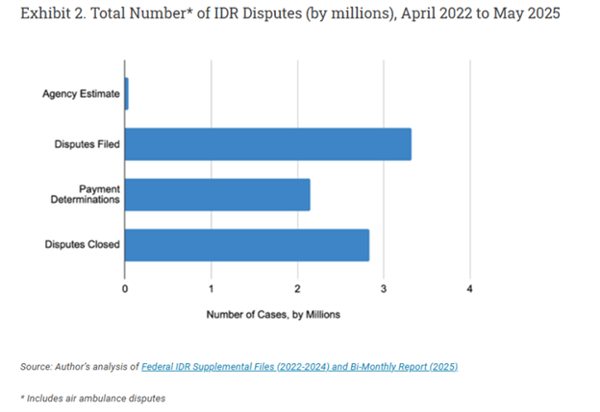
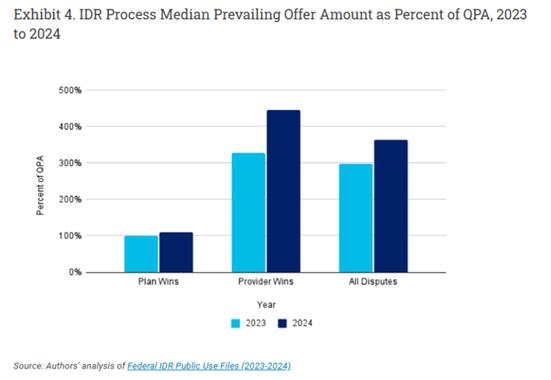
According to research conducted by Health Affairs, the high volume of these IDR disputes can be traced back to unexpectedly high use by providers, especially those backed by private equity-backed firms. It’s no surprise why: In 2025, providers won 85% of IDR disputes to receive eventual payment at three to nine times the typical in-network rate.
From 2022 to 2025, the IDR process generated $22.4 billion in total administrative and payment costs — a financial burden ultimately carried by health plans and their sponsors.
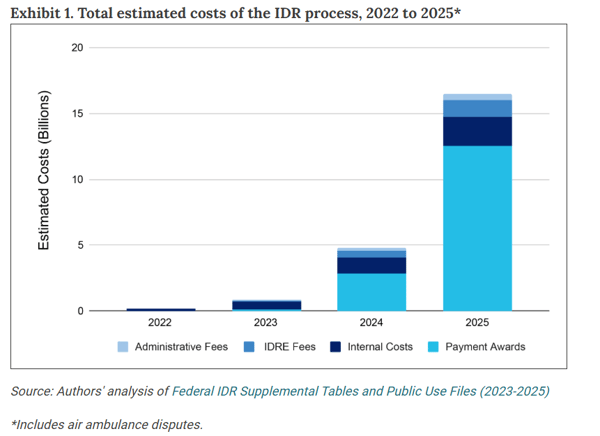
As IDR dispute volume continues to grow, so will these expenses, which are reflected in overall healthcare costs, including the premiums that consumers pay to access necessary care.
As a result, today’s TPAs face increasing pressure to deliver higher-quality, more affordable plan options for their self-funded clients, while simultaneously balancing the administrative load of ever-growing IDR processes and associated fees and costs — a weight that can be lightened with the right external partner.
The Case for Third-Party NSA and IDR Support
NSA regulations create a heavy burden for TPAs and their healthcare clients, who must complete complex QPA calculations under the strict 30-day timeline of the IDR process.
To accurately calculate QPAs, TPAs must have access to an extensive amount of data on multiple markets with many different emergency providers, air ambulance providers, and other specialty services. Accuracy of this data is critical for more than just provider payment and health plan expense; the member’s cost share is determined by this figure, as well.
Research indicates that payments deployed from IDR processes are regularly made at a higher rate than if in-network rates had been sustained in the first place. With the majority of providers winning their IDR cases, the cost of those payments (as well as the IDR fees themselves) fall to the TPA and their clients — illustrating the need for a third party that’s willing to go to the bat for the TPA in the face of unyielding providers.
In other words, to streamline the IDR process and minimize payments made on their clients’ behalf, TPAs must lean on comprehensive, data-driven compliance and repricing solutions, which is where Valenz comes in.
NSA Claim Repricing from Vālenz Health®: An All-in-One NSA and IDR Compliance Solution
Recognizing the need for TPA support, Valenz has developed a comprehensive compliance and repricing solution to take the entire NSA process off your plate.
As a feature of Valenz Out-of-Network Repricing, our NSA Claim Repricing solution delivers compliance protection and cost containment in a single, proactive strategy. With full-service support, our team represents the payer every step of the way, from initial repricing through final resolution, to eliminate the administrative burden and risk of missed deadlines for the TPA.
As a result, we not only support full NSA compliance for your clients but also data-driven, defensible reimbursements that deliver an average 70.6% savings, less than 4% provider appeal rates, and rapid turnaround.
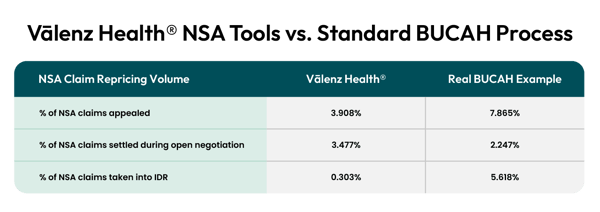
Our QPA calculations are fueled by the most comprehensive dataset in the business. We aggregate years of robust claims data from thousands of provider network cases, using industry-leading sources of payment-, cost-, and charge-based datasets, as well as biometrics and clinical data.
The result: Defensible reimbursement rates backed by extensive clinical data that delivers an average 85% IDR win/withdrawal rate.
By combining that data with our comprehensive negotiating experience, the Valenz team can minimize any additional payments needed or required to settle a claim with a QPA applied. And we do it all in a timely manner — preventing unnecessary IDR initiation when possible or the acceptance of an undesirable rate simply to meet the federally mandated timelines.
As your trusted expert in the NSA process, Valenz stands ready to guide you and your clients through the entire compliance and IDR journey to eliminate the heavy administrative burden, contain unnecessary costs, and let you get back to doing what you do best — supporting your self-funded clients with high-value healthcare solutions.
Ensure NSA Compliance and Minimize IDR Burden with Vālenz Health® Today
Here at Valenz, we’re focused on delivering more than just a policy or a service.
In protecting your plan, controlling your costs, and strengthening your role as a trusted advisor, we’re not just providing IDR support to you as a TPA. We’re also optimizing the utilization, cost, access, and quality of healthcare for all, especially the members at the heart of your clients’ plans.
To learn more about how our NSA repricing solution helps protect your self-funded clients, reduces plan spend, and strengthens your client retention — and how it can be bundled with our other solutions to elevate the healthcare experience — please contact our team below.